
4 Things I'd Never Do to my Scalp as a Trichologist (And Why)
4 Things I'd Never Do to my Scalp as a Trichologist (And Why)
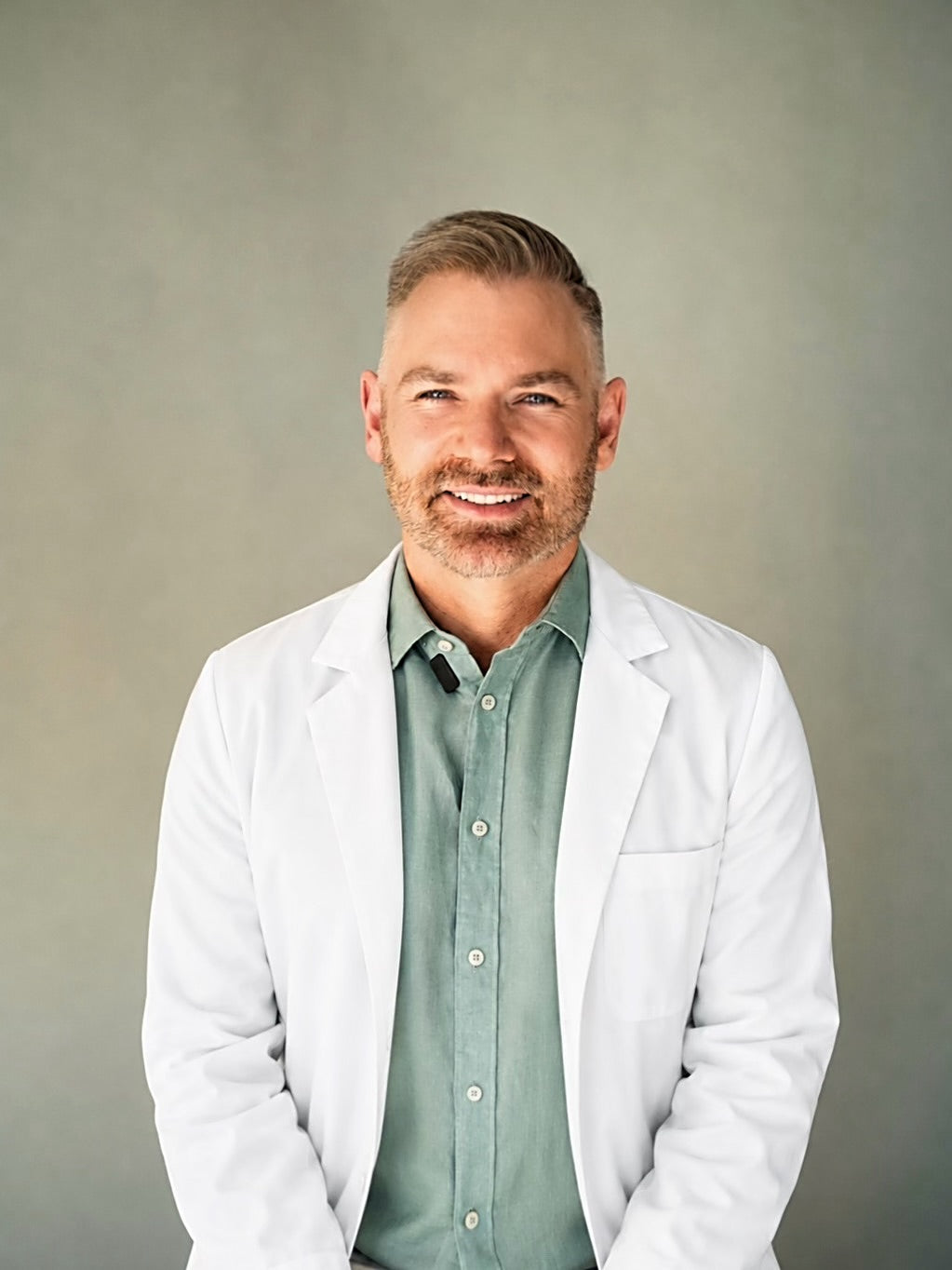
By Adrian De Brock, Certified Trichologist & Co-Founder of AGWÉ
As a certified Trichologist and studying the science behind hair and scalp health, I've noticed something interesting.
Many of the habits people believe are "good" for their hair are actually based on outdated advice, social media trends or marketing - not scalp biology.
As a trichologist, my focus has never been on quick fixes.
It's about creating the healthiest possible environment for hair to thrive over the long term.
At AGWÉ, we call this Hair Longevity.
It's the philosophy that healthier-looking hair begins with caring for the scalp long before visible concerns appear.
Here are four things I personally choose not to do or recommend.
1. I wouldn't start minoxidil without first understanding why my hair is thinning.
Hair loss isn't a diagnosis.
It's a symptom.
Male pattern hair loss, female pattern hair loss, telogen effluvium, nutritional deficiencies, hormonal changes, inflammatory scalp conditions and certain medical conditions can all lead to increased shedding or thinning.
Yet many people jump straight to minoxidil without identifying the underlying cause.
Minoxidil was originally developed as a blood pressure medication before researchers discovered it could help prolong the hair growth (anagen) phase in some individuals. While it can be an effective option for certain types of hair loss, it doesn't address every underlying cause.
That's why understanding why your hair is changing should always come before deciding how to treat it.
The best treatment plan starts with the right diagnosis.
2. I wouldn't try to "hair train" by washing less often.
This is probably one of the biggest myths I hear.
Many people believe washing less will somehow teach their scalp to produce less oil.
But your scalp doesn't learn to produce less oil because you wash it less. Sebum production is primarily regulated by hormones and genetics - not shampoo frequency.
What can happen, however, is a build-up of sebum, sweat, dead skin cells and environmental pollutants.
Over time, this build-up can disrupt the scalp environment and contribute to irritation, dandruff and an imbalance of the scalp microbiome in susceptible individuals.
A healthy scalp isn't about washing less.
It's about washing appropriately using products that cleanse without disrupting the scalp barrier.
Just as you wouldn't stop cleansing your face to improve your skin, the same logic applies to your scalp.
3. I wouldn't recommend wearing tight hairstyles every day.
A sleek ponytail or tight bun might seem harmless.
But repeated tension placed on the same hair follicles over months or years can result in traction alopecia.
Initially, this may present as tenderness, breakage or gradual thinning around the hairline.
If the tension continues for long enough, permanent follicle damage can occur.
Changing hairstyles regularly, reducing tension and giving your scalp time to recover can help reduce unnecessary stress on the follicles.
Sometimes protecting your hair is simply about being a little gentler with it.
4. I wouldn't apply scalp oils.
This one may surprise you.
Scalp oils have become incredibly popular, but they're not something I recommend.
As a trichologist, I think about the scalp the same way I think about the skin on your face. It has a protective barrier, its own microbiome and a complex biological environment that works best when it's balanced.
Applying oils to the scalp can leave a layer on the surface rather than supporting that environment. My preference is to use lightweight, water-based formulations such as a Scalp Renewal Serum, that is designed to absorb into the scalp and work with its biology instead of simply coating it.
Healthy-looking hair isn't built by covering the scalp.
It's built by supporting the scalp environment where every hair begins.
That's why my approach has always been to strengthen the scalp barrier, support the microbiome and create the healthiest possible environment for long-term hair longevity - not to add another layer on top.
The Bigger Picture
When people think about healthier hair, they usually focus on the hair itself.
I think about the scalp.
Your scalp is skin.
It has a protective barrier.
It has its own microbiome.
It responds to stress.
It ages.
And just like the skin on your face, it benefits from consistent care rather than occasional treatments.
Hair longevity isn't about finding one miracle ingredient.
It's about making better decisions consistently, supporting the environment your hair grows from and addressing concerns before they become more noticeable.
Where AGWÉ Fits In
This philosophy is exactly why we created AGWÉ.
We believe healthier-looking hair starts by caring for the scalp as living skin.
That's why every product in the AGWÉ Scalp System has been developed to support the scalp barrier, help maintain a balanced microbiome and create the healthiest possible environment for hair over time.
It's a preventative approach to scalp care.
An approach inspired by skincare.
Because when you care for the scalp first, you're investing in the future of your hair.
Healthy-looking hair doesn't begin with your hair.
It begins with your scalp.
Learn more
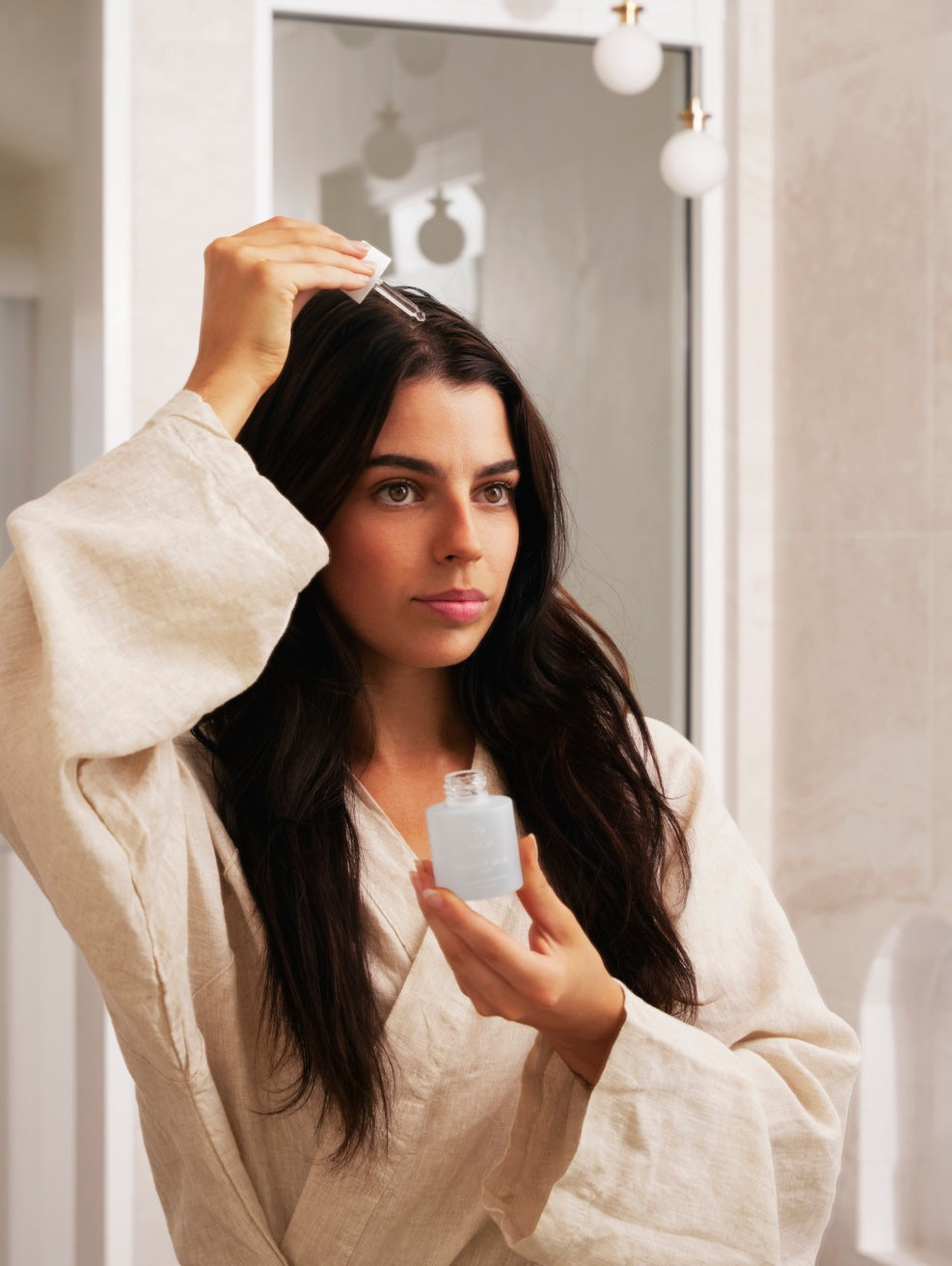
Your scalp has a biological clock - and stress, sleep, and sun exposure can throw it off balance. Learn how Algexome™, our microalgae-derived biotech complex, supports the scalp's natural rhythm fr...
Many haircare habits we take for granted aren't always supported by scalp biology. In this article, Certified Trichologist Adrian De Brock shares the four things he personally avoids - from "hair t...
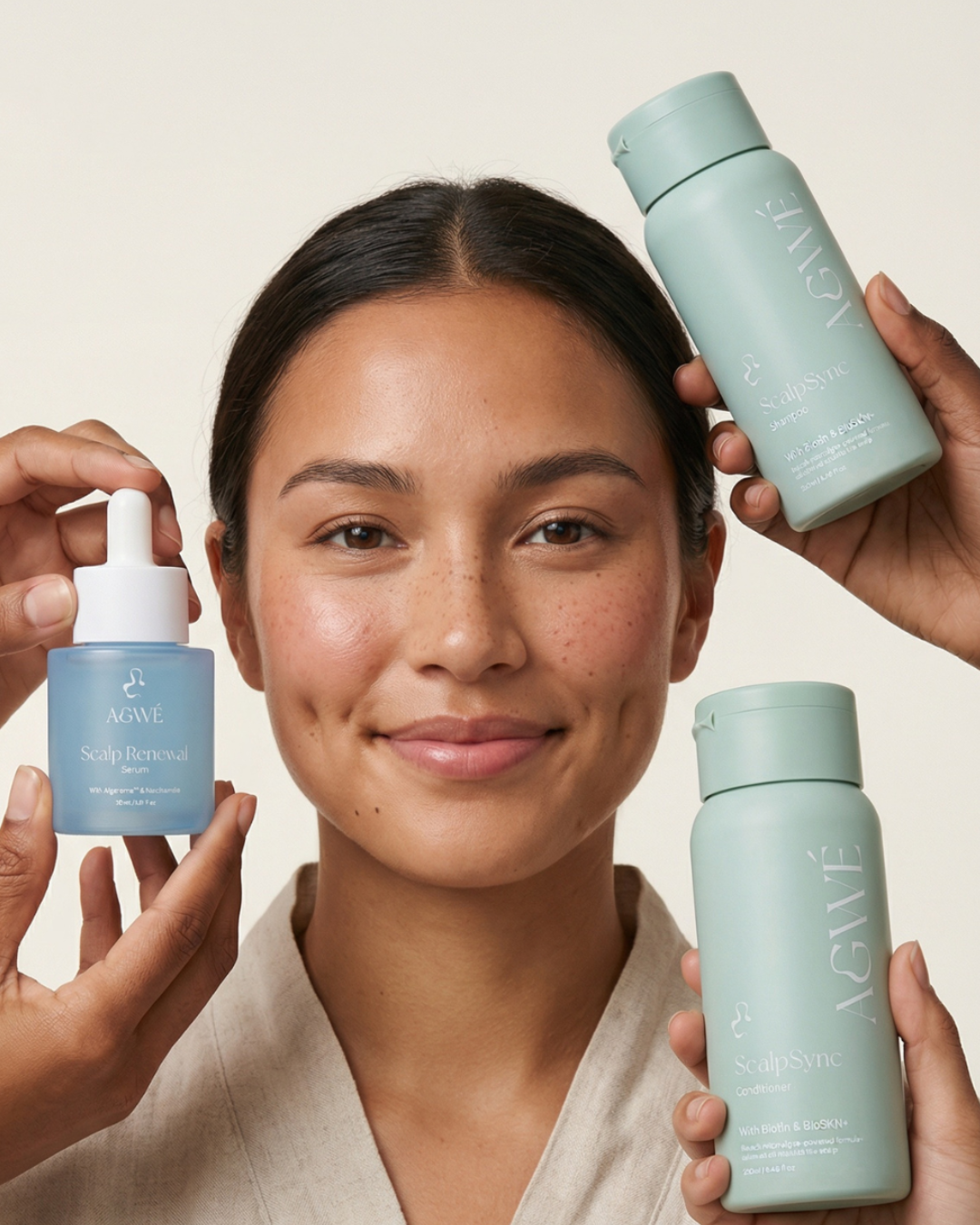
What is hair longevity? Discover why scalp health, prevention and science-led care are reshaping the future of haircare - and why healthier-looking hair begins with your scalp.
Daily stress can disrupt the scalp environment, weakening follicles and accelerating visible hair ageing. AGWÉ works at the scalp level to restore balance and support renewal, so hair can grow healthier hair over time.
Most haircare treats the strands. AGWÉ treats the scalp beneath them.


