

Common Scalp Issues (And What They’re Really Telling You)
As a trichologist, one of the most common things I hear is:
“My scalp just doesn’t feel right.”
It might be flaky.
It might be itchy.
It might feel tight, oily, irritated - or all of the above.
What’s important to understand is this:
Scalp issues are rarely random.
They are signals.
Your scalp is living skin. It has a barrier. It produces oil. It hosts a microbiome. It responds to hormones, stress, climate and product build-up. When something shifts, it communicates.
Let’s look at the most common scalp issues and what they’re often telling you beneath the surface.
1. Flaky Scalp: Dryness or Dandruff?
One of the most searched scalp questions is:
“Why do I have white flakes?”
Flaking is not a diagnosis. It is a symptom.
The two most common causes are dry scalp and dandruff - and they require different approaches.
Dry Scalp
If the flakes are:
-
Fine
-
White
-
Powdery
-
Accompanied by tightness
It is often a moisture and barrier issue.
Dry scalp occurs when the skin barrier struggles to retain hydration. When this barrier becomes compromised, moisture escapes more easily and shedding becomes more visible.
Common contributors include:
-
Environmental dehydration
-
Cold or dry air
-
Harsh product use
-
Excessive heat styling
What it’s telling you:
Your scalp needs hydration and barrier support - not oil control.
Dandruff
If flakes are:
-
Larger
-
Slightly yellow or greasy
-
Accompanied by itchiness or redness
This is more likely dandruff.
Dandruff is typically associated with excess oil production and an imbalance in the scalp microbiome. A naturally occurring yeast called Malassezia can proliferate in oil-rich environments, triggering inflammation and accelerated skin cell turnover.
What it’s telling you:
Your scalp needs oil regulation and microbiome balance - not heavy moisturising.
2. Itchy Scalp: A Sign of Inflammation
An itchy scalp without obvious flakes is another common concern.
Occasional itch is normal. Persistent itch is usually a sign of irritation or inflammation.
Triggers may include:
-
Barrier disruption
-
Microbiome imbalance
-
Contact sensitivity to products
-
Environmental exposure (salt, chlorine, pollution)
-
Stress
The scalp has a dense nerve supply and can become reactive when inflammation rises, even subtly.
Chronic scratching can further weaken barrier integrity and perpetuate the cycle.
What it’s telling you:
The scalp environment is irritated. The goal is to calm and stabilise - not aggressively treat.
3. Oily Scalp: What Is Actually Driving It?
Oil production is one of the most misunderstood aspects of scalp health.
Sebum output is primarily regulated by:
-
Androgens (particularly DHT and related hormones)
-
Genetics
-
Age
-
Certain inflammatory scalp conditions
Sebaceous glands respond to hormonal signals - not to how much oil has been physically removed from the surface.
There is no strong clinical evidence showing that washing or “stripping” directly increases sebum production as a rebound mechanism.
However, harsh products can disrupt the skin barrier and increase irritation. Inflammation may make the scalp feel more reactive and may worsen conditions like dandruff, but the root driver of oil production remains hormonal and genetic.
When excess oil accumulates on the scalp, it can:
-
Feed yeast overgrowth
-
Contribute to dandruff
-
Increase build-up
-
Affect the follicle environment
What it’s telling you:
Oiliness reflects internal biology. The solution is balanced cleansing that removes surface oil while maintaining barrier integrity.
Sebum itself is not the enemy. It plays a protective role in skin function. Regulation, not elimination is the goal.
4. Tight, Dry or Sensitive Scalp
A tight scalp sensation often indicates barrier compromise.
The scalp barrier functions similarly to facial skin. When lipid balance is disrupted or hydration is depleted, transepidermal water loss increases and sensitivity rises.
Common triggers include:
-
Environmental stress
-
UV exposure
-
Salt water
-
Hard water minerals
-
Inappropriate product use
When the barrier weakens, the scalp may become more reactive to products that previously felt comfortable.
What it’s telling you:
Barrier support is needed. Gentle cleansing and consistent scalp care restore resilience over time.
5. Redness and Visible Irritation
Persistent redness suggests inflammation.
Possible causes include:
-
Seborrhoeic dermatitis
-
Contact dermatitis
-
Psoriasis
-
Product sensitivity
-
Microbiome imbalance
Inflammation around the follicle can alter the local growth environment. While mild irritation can often be managed with routine adjustments, ongoing redness or discomfort should be assessed by a healthcare professional.
What it’s telling you:
The scalp is under stress. Reduce triggers and prioritise calming support.
6. Product Build-Up and Scalp Congestion
Build-up is frequently overlooked.
It can result from:
-
Styling products
-
Dry shampoo
-
Hard water minerals
-
Sweat
-
Environmental pollutants
Signs of congestion include:
-
Dull roots
-
Reduced lather
-
Coated or heavy sensation
-
Increased itch
-
Flat or lifeless hair
Accumulated residue can interfere with how effectively active ingredients reach the scalp and may disrupt microbiome balance.
What it’s telling you:
The scalp needs consistent, thorough, but gentle cleansing.
7. Increased Shedding
Some shedding is normal. Most individuals lose between 50–100 hairs per day.
Noticeable increases in shedding may be associated with:
-
Telogen effluvium (often stress-related)
-
Hormonal fluctuations
-
Nutritional deficiencies
-
Inflammatory scalp conditions
Chronic inflammation can shorten the growth phase of hair over time.
What it’s telling you:
Assess scalp health, systemic stressors and overall balance. Shedding is often multi-factorial.
The Role of the Scalp Microbiome
The scalp microbiome plays a key role in regulating:
-
Inflammation
-
Oil balance
-
Barrier integrity
-
Yeast populations
Disruption can occur from:
-
Harsh formulations
-
Environmental exposure
-
Chronic build-up
-
Ongoing inflammation
Supporting the microbiome does not mean avoiding cleansing. It means choosing formulations that remove residue while respecting the scalp’s ecosystem.
Balance is the goal.
The Over-washing Misconception
One of the most persistent myths in scalp care is that frequent washing causes oiliness or damage.
Current dermatological understanding does not support the idea that washing increases sebum production directly.
Sebum output is hormonally regulated.
However, overly harsh products can disrupt barrier integrity and exacerbate irritation, which may worsen certain scalp conditions.
The issue is not frequency alone.
It is formulation compatibility.
A well-formulated cleanser that removes excess oil, salt, chlorine and mineral residue while maintaining barrier balance can be used regularly - particularly in environments with high environmental exposure.
A clean scalp is not a compromised scalp.
It is a balanced one.
When to Seek Professional Advice
While many common scalp issues are manageable with thoughtful routine adjustments, seek medical advice if you notice:
-
Thick plaques
-
Sudden or severe shedding
-
Painful lesions
-
Persistent crusting
-
Rapid worsening of symptoms
Conditions such as psoriasis, severe seborrhoeic dermatitis or fungal infections require clinical management.
What a Healthy Scalp Looks Like
A balanced scalp:
-
Feels comfortable
-
Is not persistently itchy
-
Has minimal visible flaking
-
Produces moderate oil
-
Supports consistent growth
It is not completely oil-free.
It is not aggressively exfoliated.
It is calm.
Final Thoughts: Your Scalp Is Communicating
Most people react quickly when something feels “off.”
They switch products.
They wash less.
They wash more.
They layer treatments.
But scalp health improves when you interpret the signal correctly.
Flakes are communication.
Itch is communication.
Oiliness is communication.
Redness is communication.
Your scalp is not working against you.
It is responding to internal and external influences.
Healthy hair begins with understanding the environment your follicles live in and supporting it consistently.
Listen before you react.
Balance before intensity.
That is where long-term scalp health begins.

ADRIAN DE BROCK
Co-founder/ IAT Certified Trichologist
Learn more
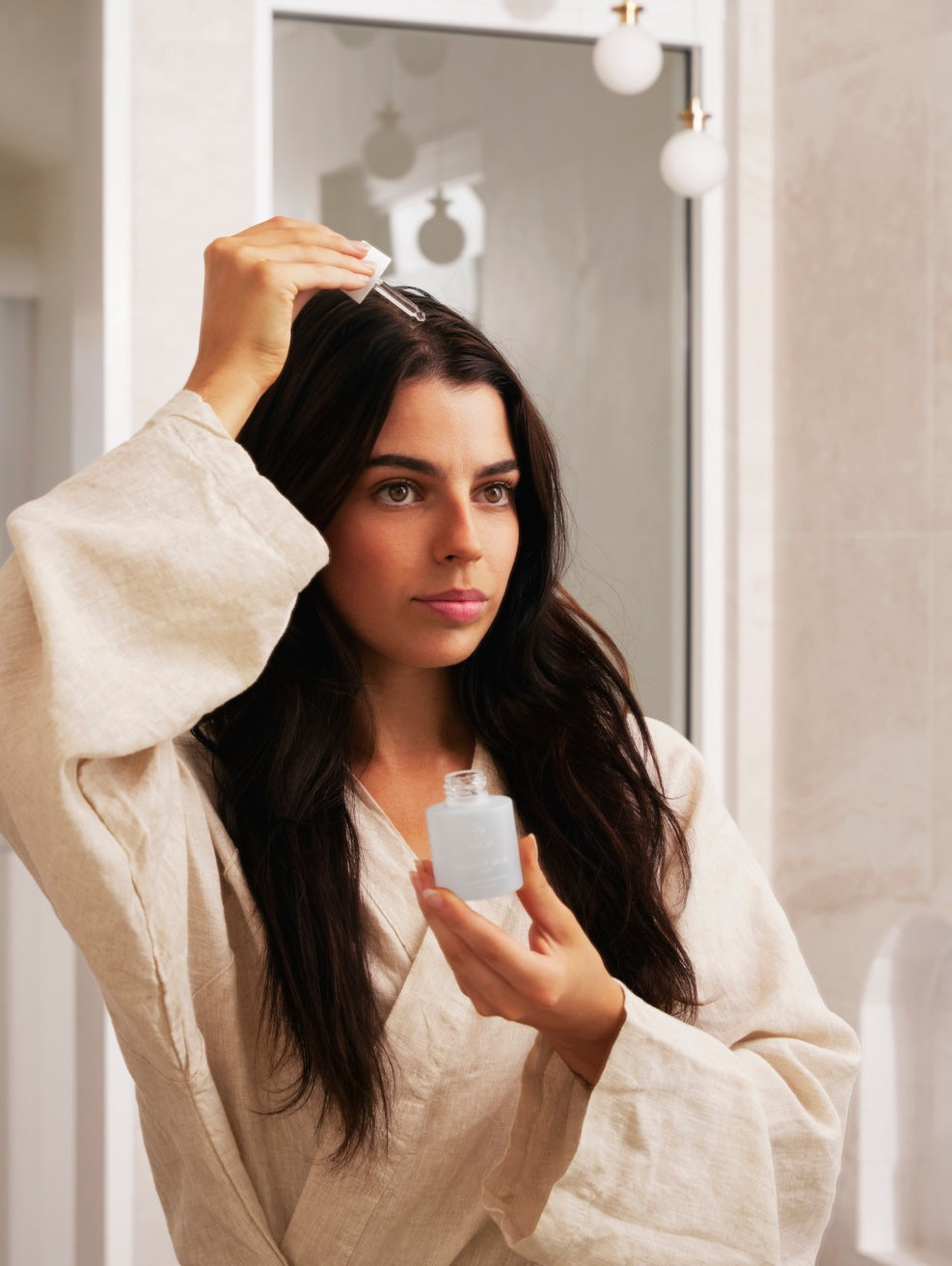
Your scalp has a biological clock - and stress, sleep, and sun exposure can throw it off balance. Learn how Algexome™, our microalgae-derived biotech complex, supports the scalp's natural rhythm fr...
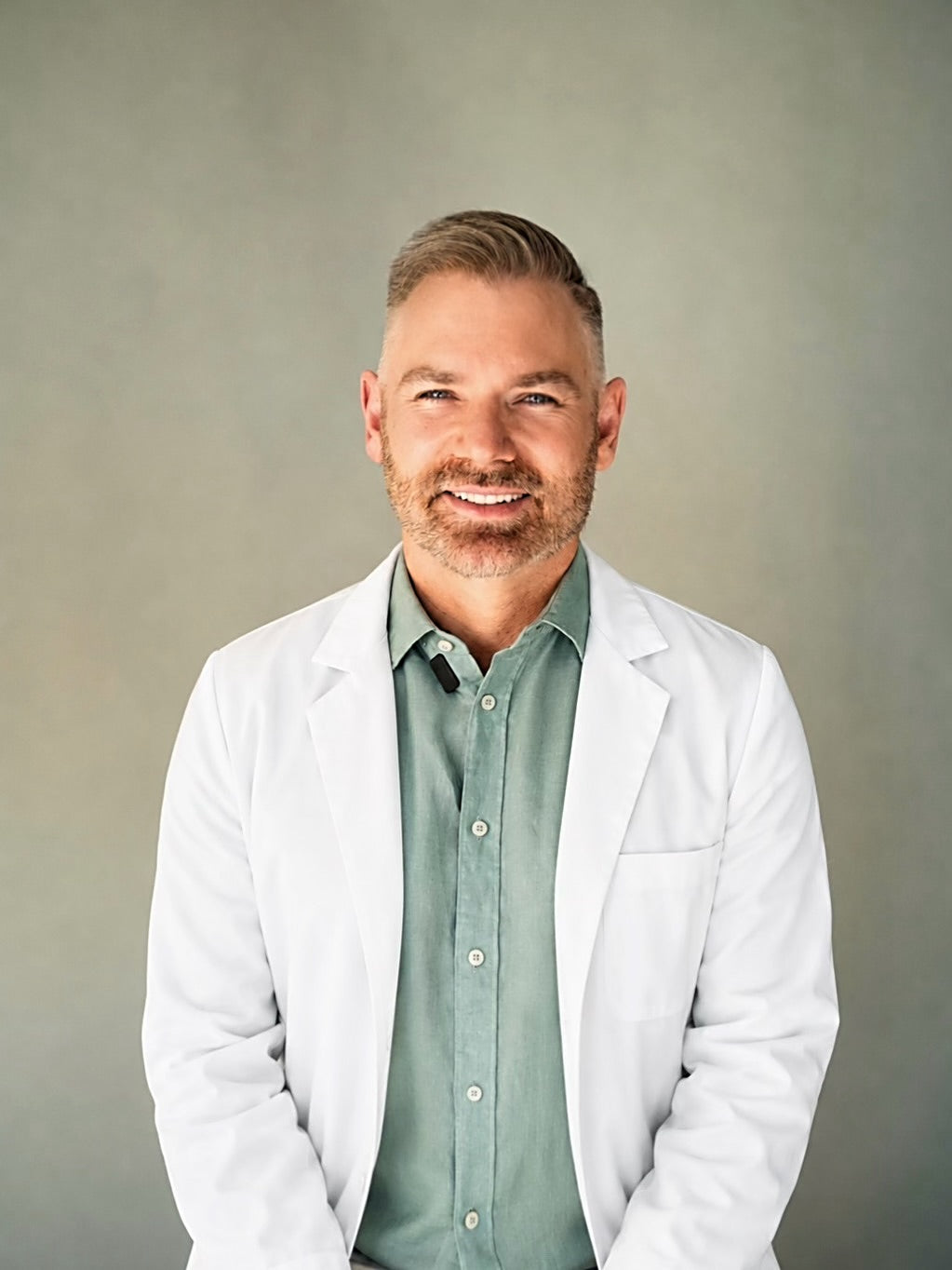
Many haircare habits we take for granted aren't always supported by scalp biology. In this article, Certified Trichologist Adrian De Brock shares the four things he personally avoids - from "hair t...
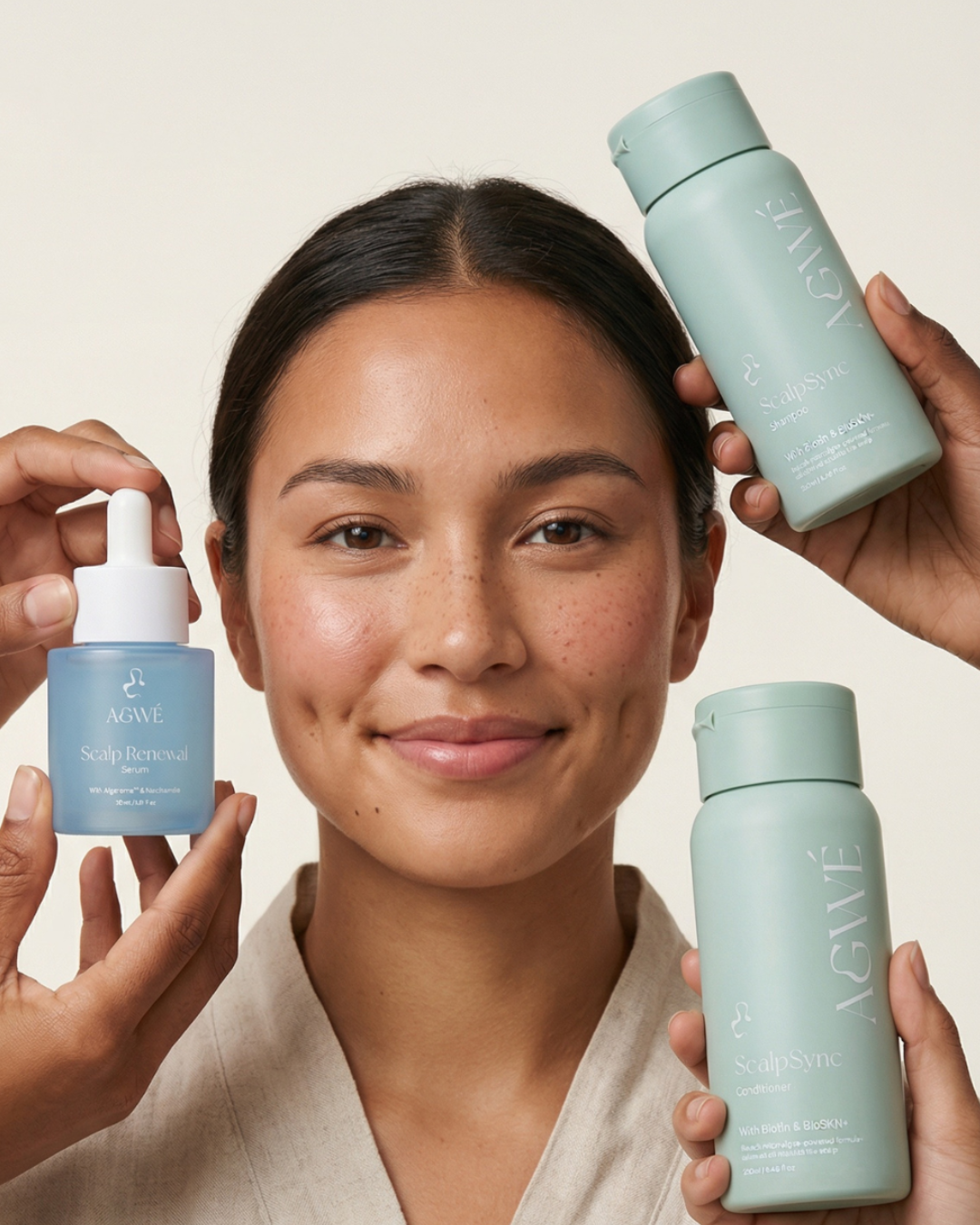
What is hair longevity? Discover why scalp health, prevention and science-led care are reshaping the future of haircare - and why healthier-looking hair begins with your scalp.
Daily stress can disrupt the scalp environment, weakening follicles and accelerating visible hair ageing. AGWÉ works at the scalp level to restore balance and support renewal, so hair can grow healthier hair over time.
Most haircare treats the strands. AGWÉ treats the scalp beneath them.


