
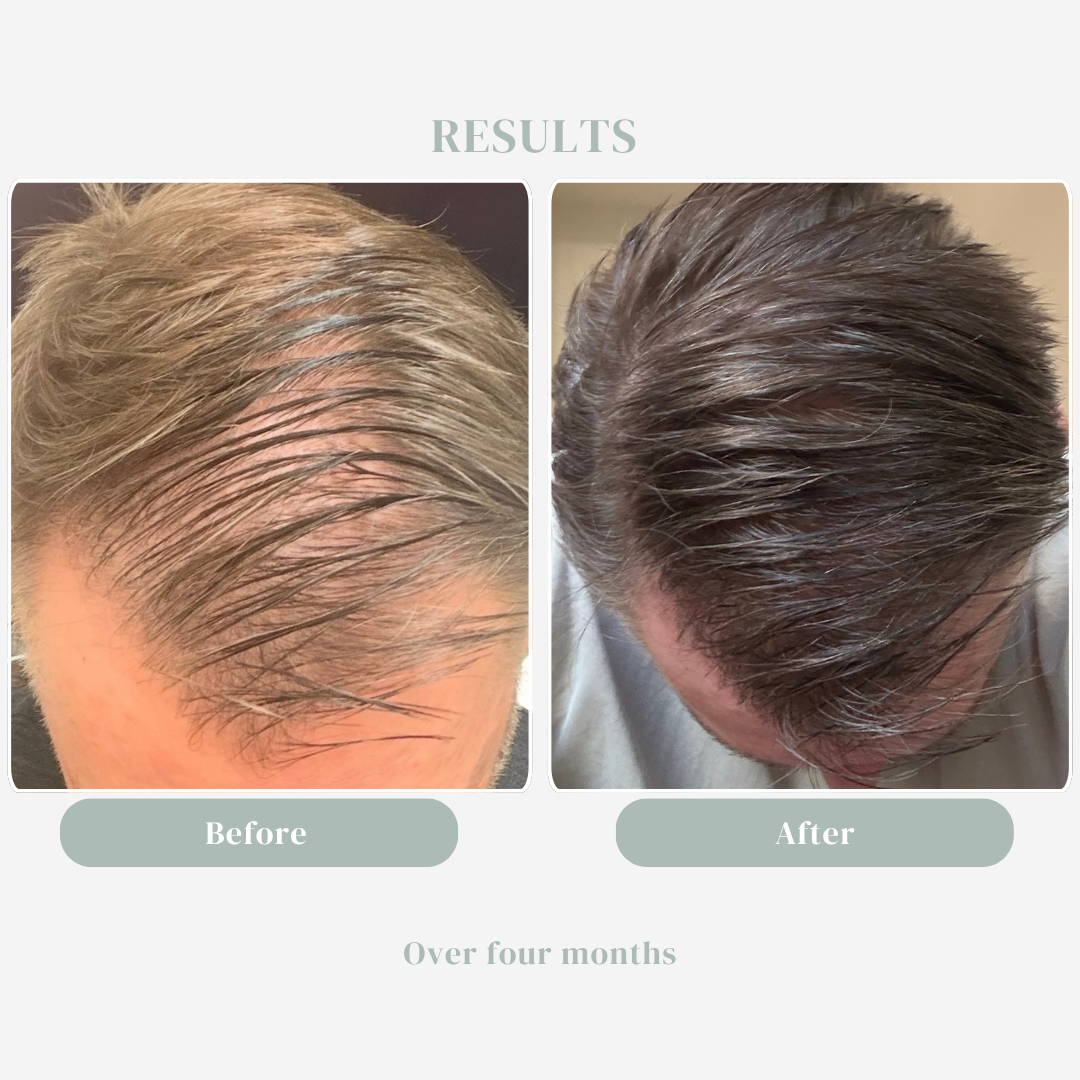
What is pattern thinning?
Male and Female Pattern Thinning: Understanding What Changes Beneath the Surface
A widening part. A more visible crown. A hairline that gradually moves backwards. Pattern thinning often begins quietly, with changes you notice in photographs or while styling your hair.
Understanding what is happening beneath the surface can help you recognise these changes and seek appropriate support.
What is pattern thinning?
Male and female pattern hair loss, commonly called androgenetic alopecia, involves progressive thinning and a process known as miniaturisation. Over successive growth cycles, affected follicles produce finer, shorter hairs. The growing phase shortens, and overall density gradually declines. This explains why hair can look less full even without dramatic shedding.
Male pattern thinning: the role of DHT
In men, thinning typically affects the temples, frontal hairline and crown. Genetics influence how susceptible follicles respond to androgens, particularly dihydrotestosterone, or DHT.
DHT is formed from testosterone through an enzyme called 5-alpha-reductase. In susceptible follicles, its activity contributes to progressive miniaturisation. The result is a gradual change in coverage, rather than every affected hair suddenly falling out.
Female pattern thinning: a different presentation
Women commonly notice a widening central part, reduced fullness through the top of the scalp or a smaller ponytail. The frontal hairline often remains relatively preserved.
Female pattern thinning is hereditary and becomes more common after menopause, suggesting hormones may contribute. However, the explanation is more complex than simply having “too much testosterone”. Most women with female pattern hair loss have normal androgen levels. A widening part alone cannot tell you whether a hormonal imbalance is present.
Thinning and shedding can overlap
Pattern thinning usually develops progressively. Sudden, widespread shedding may indicate another process, such as telogen effluvium following illness, childbirth or significant stress. Both conditions can occur together, making professional assessment valuable.
Rapid changes, patches of hair loss, scalp pain or persistent irritation deserve medical attention rather than an assumption that genetics explains everything.
Taking an informed approach
A GP or dermatologist can assess the pattern, examine the scalp and investigate other contributors when appropriate. Treatment options include topical minoxidil and, for suitable patients, prescription medicines selected according to individual needs.
Treatment takes time: visible improvement commonly requires at least six months, and ongoing use is often needed to maintain benefits. Recognising changes early creates an opportunity to discuss your options sooner.
Where AGWÉ fits: supporting the biology beneath the surface
Genetics are central to pattern thinning and any treatment must involve blocking DHT first, but oxidative stress and low-grade inflammation around affected follicles have also been documented. These processes may place additional pressure on the cells involved in maintaining hair growth.
Hair follicles also have their own biological clocks. These local timing systems help regulate follicle activity and influence the growth cycle. Follicles can even produce melatonin locally - a molecule involved in signalling within the follicle, beyond its familiar connection with sleep.
This biology informs AGWÉ’s scalp-first approach. Our Scalp Renewal Serum contains Algexome™, a microalgae-derived ingredient with two complementary mechanisms: activating NRF2 to support cellular antioxidant defences and modulating the melatonin receptor MTNR1A to support melatonin signalling.
Together, these mechanisms provide a rationale for caring for the scalp’s response to oxidative stress while recognising the importance of the follicle’s natural biological rhythms.
Created by a certified trichologist and a cosmetic scientist, AGWÉ brings this perspective into a daily ritual of cleansing, conditioning and targeted scalp care - supporting the scalp environment alongside appropriate treatment for genetic thinning.
Before you chase what’s visible, care for what sustains it.
Learn more
A widening part or a more visible crown can signal changes beneath the surface. Explore how male and female pattern thinning develops, the role of genetics and hormones, and how AGWÉ’s scalp-first ...

Your scalp has a biological clock - and stress, sleep, and sun exposure can throw it off balance. Learn how Algexome™, our microalgae-derived biotech complex, supports the scalp's natural rhythm fr...

Many haircare habits we take for granted aren't always supported by scalp biology. In this article, Certified Trichologist Adrian De Brock shares the four things he personally avoids - from "hair t...
Daily stress can disrupt the scalp environment, weakening follicles and accelerating visible hair ageing. AGWÉ works at the scalp level to restore balance and support renewal, so hair can grow healthier hair over time.
Most haircare treats the strands. AGWÉ treats the scalp beneath them.


